
The Practice and the Practitioner
Saki Savavi is a liberation cartographer, independent scholar, and gender-expansive practitioner whose work refuses the separation between rigorous inquiry and embodied knowledge. She builds frameworks that trace how colonial cartography has shaped entire generations' spatial imagination, and what it takes to draw free from those inherited coordinates.
Originally from Philadelphia. Formed by the Sonoran Desert. Building now in Atlanta.


My Mission & Values
I didn't arrive at these through a mission statement exercise. They came from making mistakes, asking better questions, and paying attention to what the practice kept asking of me.
Right Relationship
I don't take access as a given. I treat it as something earned slowly, sometimes never granted at all, and I've learned to be at peace with that difference. The work moves through cultures and traditions that aren't mine by birth, which means every door I'm invited through comes with real responsibility. Right relationship means honoring what stays closed as much as what opens. A boundary isn't a wall to work around. It's information.
Curiosity
Curiosity is what keeps the scholarship honest. Every time I've followed a question I wasn't supposed to ask, it's led somewhere the practice needed to go. That includes questions about the maps themselves: who drew them, for whom, and what they were designed to make invisible.
Re-membering
The maps we inherit tell a story about who belongs where and what's worth knowing. Re-membering is the practice of recovering what those maps displaced. Not as nostalgia, but as a methodology. It's the through-line in everything I make.

What are leylines
Leylines are alignments. pathways connecting significant sites across a landscape, running through sacred monuments, ceremonial grounds, and places where human attention has gathered for centuries. The concept shows up across cultural traditions worldwide: feng shui dragon lines in Chinese geomancy, Aboriginal songlines in Australia, the ceremonial roads of the ancient Americas. The earth has always been encoding information about itself. Leylines are one of the ways that encoding becomes readable.
My relationship to leylines isn't only about mapping these alignments on paper. It's about understanding that the correspondence between sacred sites, seasonal cycles, and celestial events carries real information about the places and times we inhabit. Working with leylines means learning to read that correspondence, and then asking what it reveals about where you are and what that location is asking of you.
The 3rd edition of The Leyline Almanac traces twelve sacred sites through the zodiac year because each site holds a particular charge that corresponds to the season's energy. Cahokia Mounds in Taurus season. The geography of the Great Migration in Gemini season. The almanac maps those correspondences so the reader can locate themselves within a story that's longer than any single year.
Astrocartography works from the same root. Every location carries a different energetic signature for you specifically, based on where the planets were positioned when you were born. The places that activate your creative capacity are different from the places that activate your authority, your relationships, your healing. Understanding your astrocartographic map is liberation geography made personal. It expands the territory you understand yourself to inhabit.

Where It’s Headed
Afro-indigenous waters run through my bloodline. My lived experience has been at a distance from those roots, and I stopped framing that distance as only a wound a while back. What it actually produced was a particular kind of attention. You learn to read the land differently when you're not certain which land claims you. That attentiveness became the methodology.
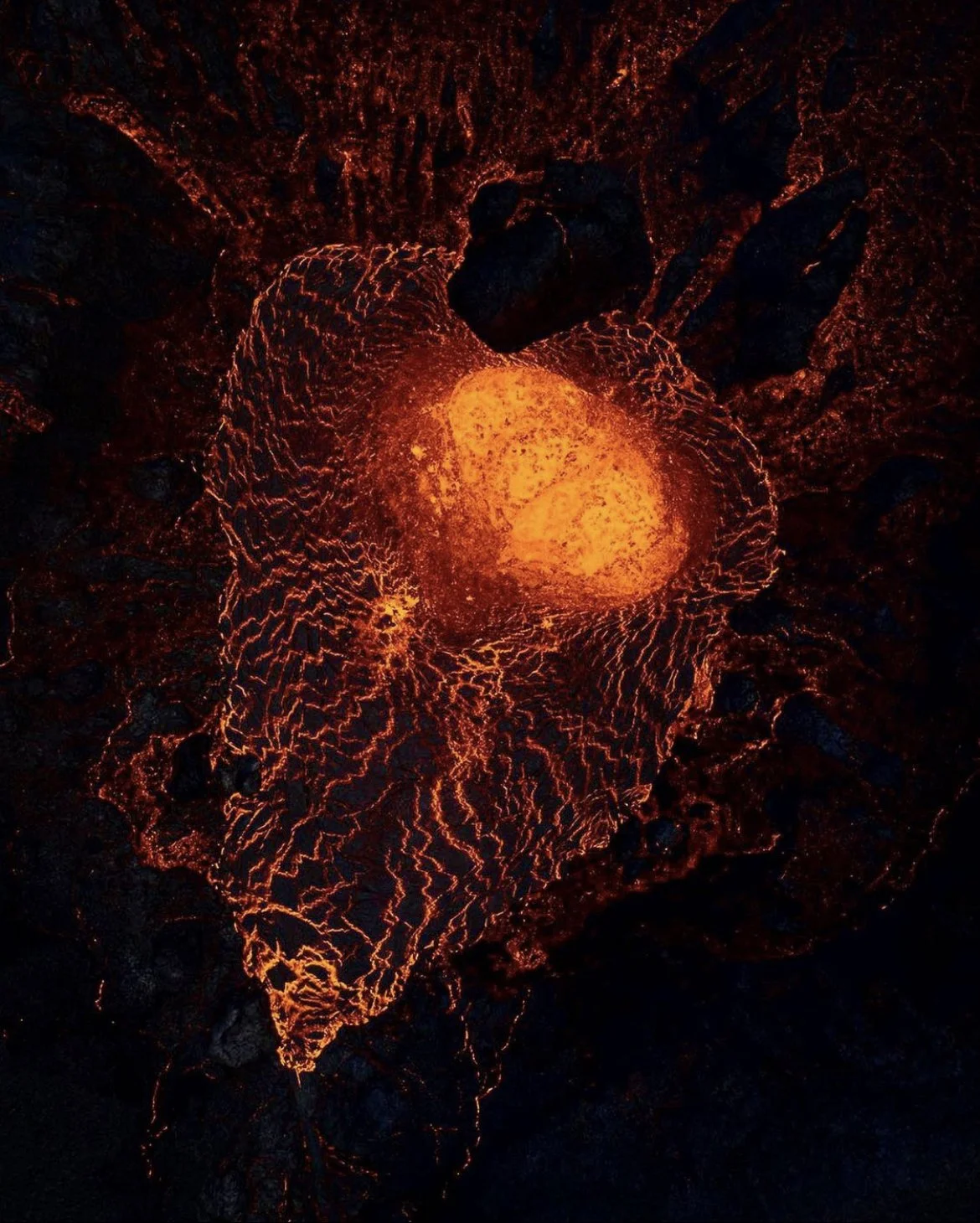
I call the process Mud Work. Not because it's painful, though it has been, but because mud is what you get when water meets earth and something new becomes possible. The clay I'm building from now is formed from everything that shaped me: Philadelphia, the Sonoran Desert, Salafi Islam, liberation geography, the fire, the maps, the practice of showing up to my own life as a serious student of it.
The work that has come from that process keeps expanding. A peer-reviewed essay in the Land Food Freedom Journal. A keynote at the Royal Institute of Art in Stockholm. An invited talk with AA VS Climate Cartographies in Samarkand, Uzbekistan. A documentary in post-production. An almanac in its third edition. An independent consulting practice that applies these frameworks one person at a time.
There are many soils that made this body. Mapping those connections is still the foundation. It always will be.

Sprouted Seeds
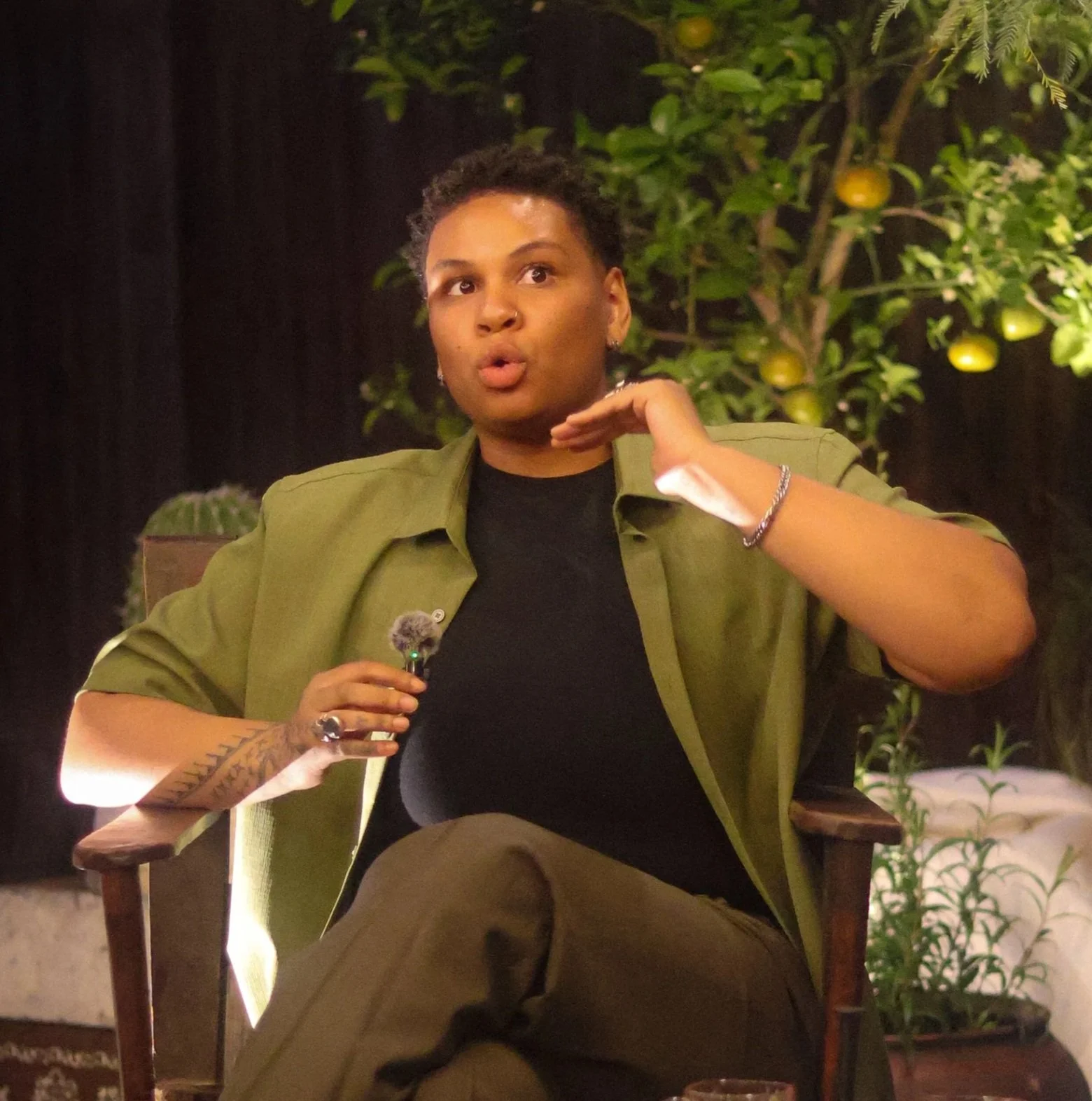
I'm a gender-expansive woman with deep roots along the American East Coast. Born and raised in Philadelphia within the Salafi sect of Islam, I encountered more-than-human realms early in life. Two things became clear from those early encounters that have shaped everything since: organized religion holds a complicated relationship with the non-corporeal, and religious community has historically been one of the most sophisticated technologies Black Americans have used to maintain cultural continuity across conditions designed to sever it.
The past decade moved me through film, visual art, and energy work before landing in the literary and spatial practice of counter-cartography. That sequence wasn't accidental. Each medium was teaching me something about how knowledge travels through form, and counter-cartography turned out to be the form where all of it converged. I studied at Morgan State University and hold the distinction of being the first federally registered Arts2Work Apprentice in the nation.
I use she/her pronouns. I'm expanding on the canvas I was born with, not refusing it. That distinction matters to how I understand myself and to how the work gets made.
