The Intimacy of Being Truly Seen: Cultivating Recognition That Nourishes Rather Than Depletes
I only care for the attention of people that actually see me. I have no issue telling folks I'm not interested in them or removing myself if the vibe isn't hitting. Very clear. Very no hard feelings. Very next.
This clarity emerged from years of navigating the opposite extreme of people-pleasing behavior. I became the lone wolf, the oddball more concerned with being true than being liked. While this position protected my authentic expression, it carried its own particular pains and misperceptions. People assumed my selectivity meant arrogance when it actually reflected careful stewardship of my creative energy.
The real shift happened when I learned to manage layers of vulnerability strategically. Instead of being so niche that only a select few could hear me, I discovered how to remain accessible while maintaining boundaries around my depth for those who could truly handle it. This wasn't about diluting my message but about creating multiple entry points that honored both my authentic expression and different audience capacities for engagement.
The Historical Context of Selective Recognition
Before social media transformed attention into commodity, human communities understood recognition as a sacred resource requiring conscious stewardship. Traditional cultures developed sophisticated systems that honored both individual contribution and collective wisdom, offering insight into designing attention that serves organic development rather than addictive validation cycles.
The griot tradition in West Africa created recognition containers through established narrative forms that allowed individual creative expression, while maintaining connection to ancestral knowledge and community values. These storytellers earned recognition not through broad appeal but through demonstrated mastery of cultural transmission and ability to weave contemporary insight with inherited wisdom.
Medieval guild systems structured recognition around skill development and community service rather than popularity or individual branding. Master craftspeople gained attention through proven competence and commitment to training apprentices, creating sustainable cycles where recognition served knowledge transmission rather than ego enhancement.
Research on sustainable attention economies reveals how traditional recognition systems typically included built-in limits that prevented attention seeking from becoming pathological or community destructive. Recognition served collective flourishing rather than individual accumulation.
The Recognition Paradox Defined
Contemporary culture encourages us to crave broad recognition while simultaneously preparing us to feel empty when we achieve it. The more desperately we seek widespread attention, the more we dilute our authentic expression to appeal to broader audiences. Yet authentic expression is precisely what attracts the kind of recognition that transforms rather than merely validates.
This creates what I call The Recognition Paradox. Surface-level recognition feels temporarily satisfying but ultimately hollow because it responds to performed versions of ourselves rather than our genuine contribution. Meanwhile, the recognition that would actually nourish our development often requires expressing our authentic voice so clearly that it naturally repels those who aren't ready for our particular medicine.
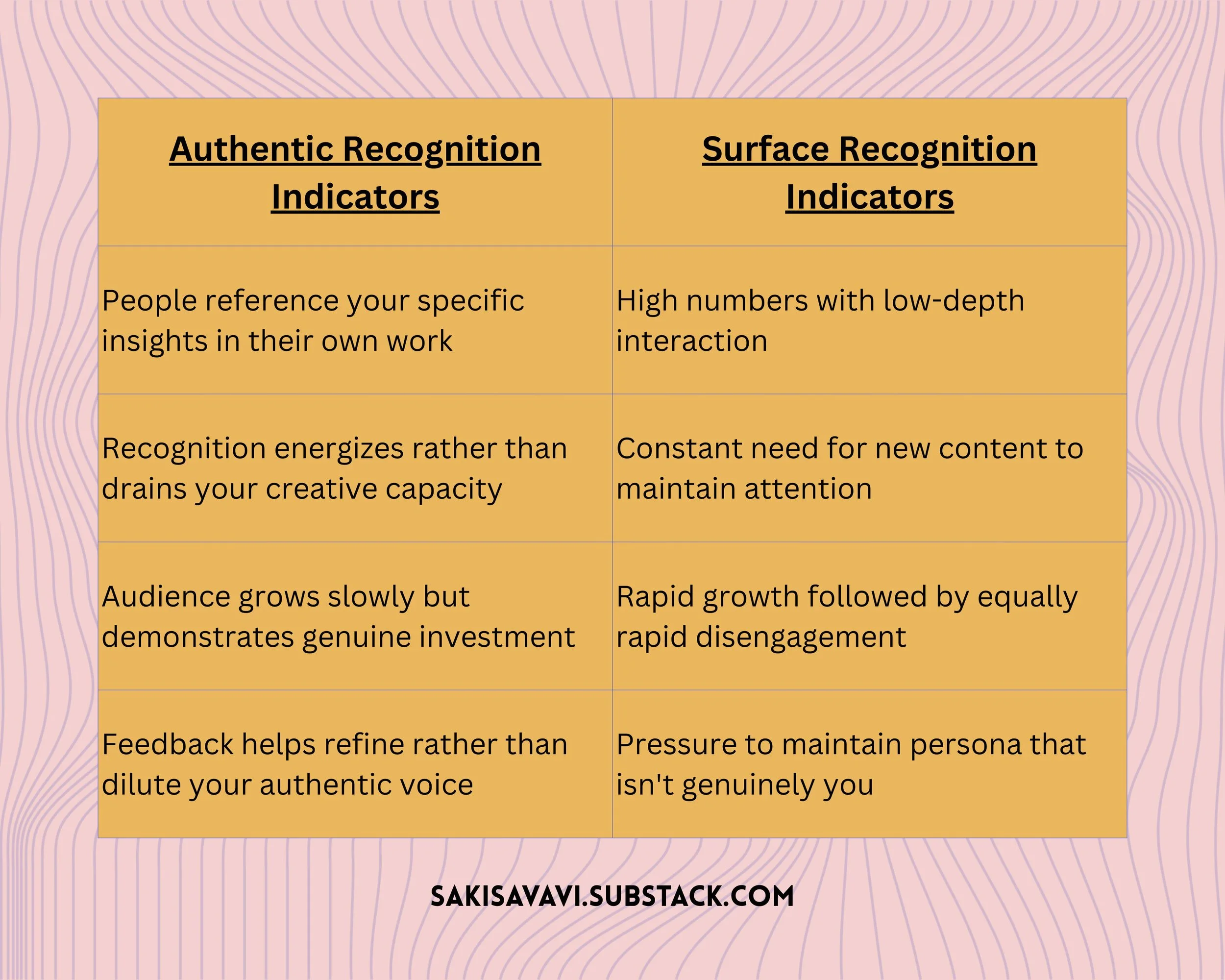
The path through this paradox involves accepting that meaningful recognition often comes from fewer people while creating more sustainable creative fuel than broad but shallow validation.
Designing Recognition Containers
Effective attention architecture requires distinguishing between containers that attract aligned recognition and those that generate scattered engagement. Aligned recognition comes from people who understand your actual contribution and want to support your authentic development, while scattered engagement comes from people responding to their projections of who you are.
The design process begins with clarifying what kind of work you actually want to be recognized for doing. This seems obvious until you examine how often we seek recognition for work that doesn't represent our deepest contributions or authentic interests.
I spent years creating content designed to demonstrate intellectual sophistication rather than sharing insights that emerged from genuine engagement with questions that captured my curiosity. The recognition I received reflected my performance of intelligence rather than my actual thinking process, leaving me feeling seen for who I pretended to be rather than who I actually was.
The turning point involved accepting that some people would never understand my work, and that this wasn't a failure of communication but a natural result of specificity. Instead of trying to make my insights accessible to everyone, I focused on making them clear enough that the right people could find and engage them deeply.
Strategic Vulnerability Management
Building recognition containers requires understanding how to share authentically while maintaining appropriate boundaries around your depth. This means creating multiple access points that honor both your need for authentic expression and different audience capacities for engagement.
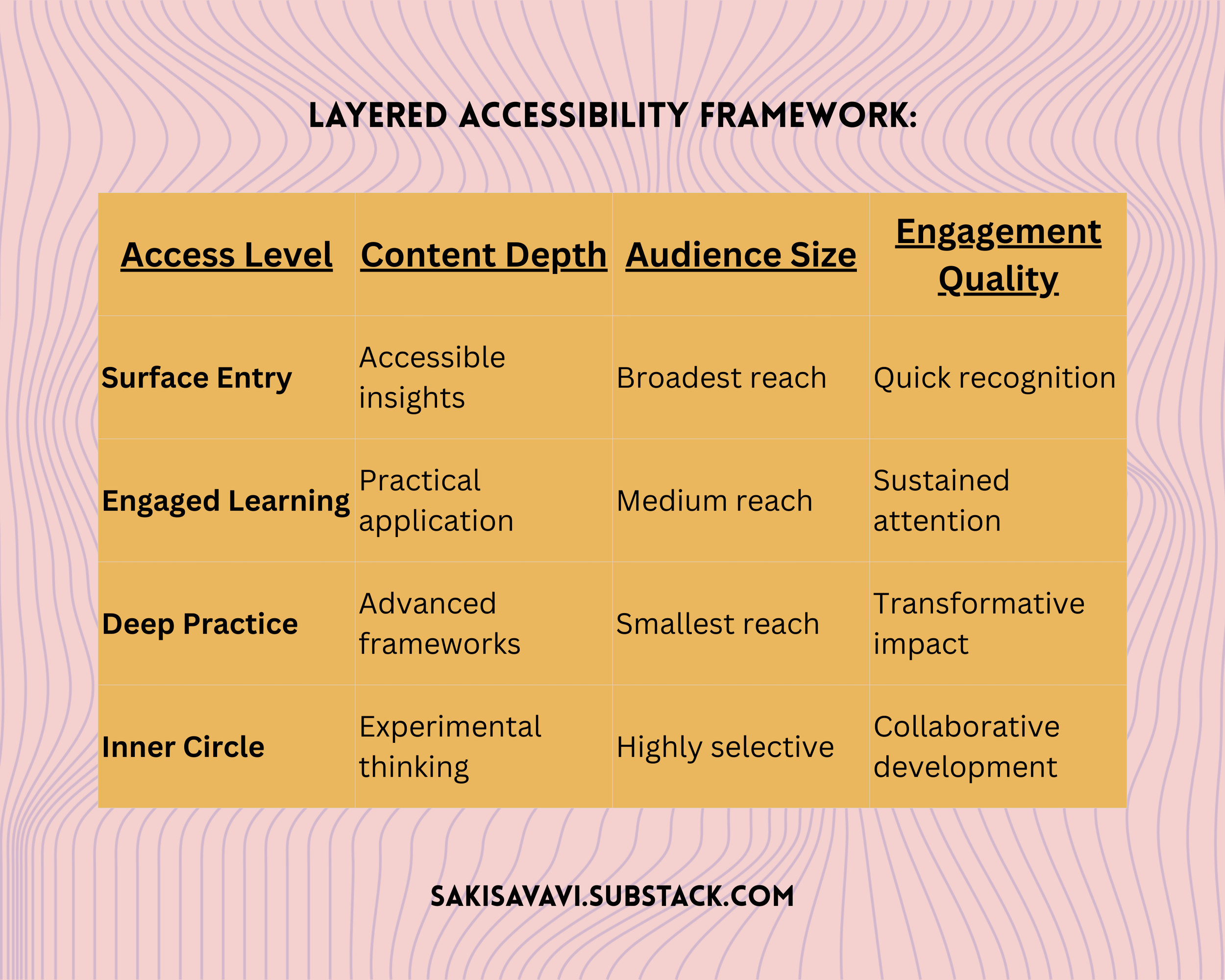
The goal is creating clear pathways between levels while maintaining boundaries that protect your most vulnerable or experimental work from audiences not prepared to engage it constructively. This isn't about hiding your authentic self but about strategic disclosure that serves both your development and your audience's capacity for genuine engagement.
I learned this through observing which of my content generated meaningful responses versus which simply attracted surface-level validation. The insights that created the deepest connection often required courage to share but attracted people capable of engaging the complexity rather than demanding simplification.
Energy Management in Recognition Systems
Sustainable attention architecture requires understanding how different types of recognition affect your creative energy systems. Recognition aligned with authentic contribution typically increases energy available for deeper work, while misaligned recognition often depletes resources even when it appears positive.
This distinction becomes essential for anyone building creative platforms or developing public work. The temptation to accept all positive attention can lead to energy depletion and creative stagnation if the recognition doesn't align with genuine contribution.
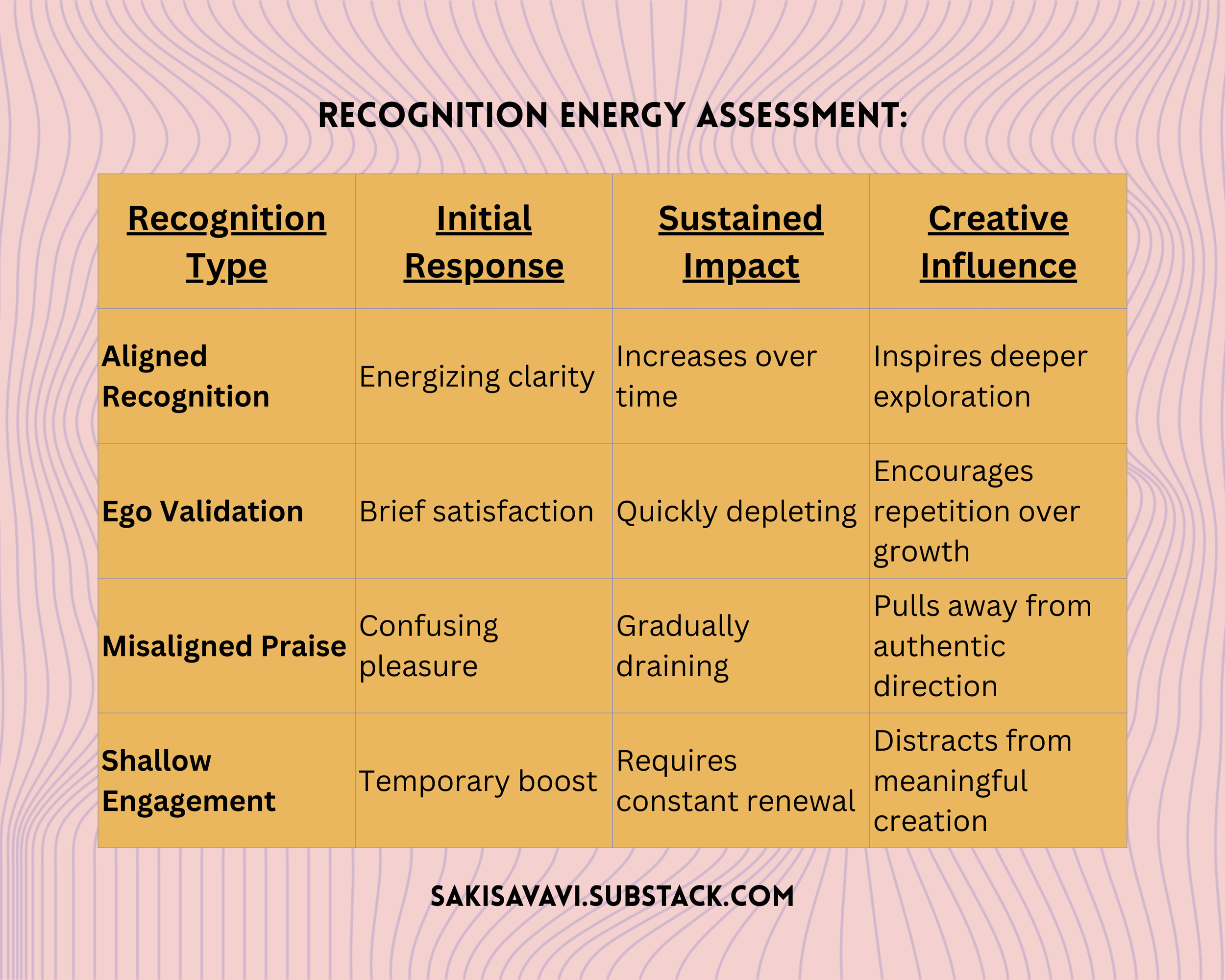
The objective involves designing recognition systems that consistently generate aligned recognition while naturally filtering out energy-depleting validation. This requires both strategic thinking about platform architecture and ongoing personal development around attachment to approval.
Platform Architecture for Depth Recognition
Different platforms support different types of recognition architecture, and understanding these distinctions helps design sustainable attention systems rather than chasing metrics that don't serve authentic development.
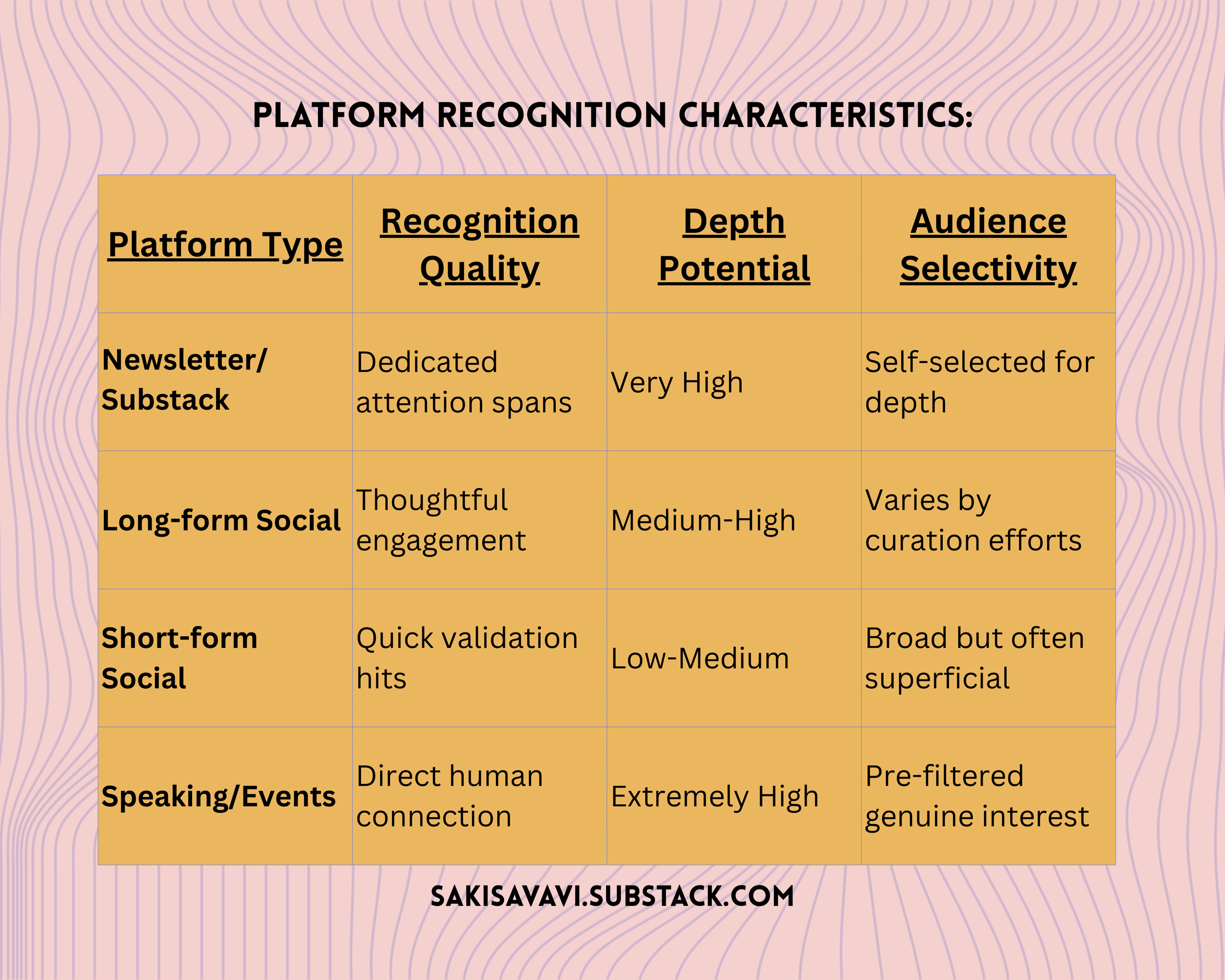
Effective attention architecture typically combines platforms strategically rather than trying to optimize any single channel. Use quick-engagement platforms to attract initial attention, depth platforms to develop meaningful recognition, and direct connection opportunities to build genuine collaborative relationships.
The most sustainable approach involves leading with depth content on platforms designed for sustained attention rather than trying to build profound audiences on platforms optimized for quick engagement.
Sustainable Recognition Design
Long-term attention architecture requires building systems that evolve with your authentic development rather than locking you into performing static versions of yourself. This means designing recognition containers flexible enough to grow with changing interests and deepening expertise while maintaining connection with people who appreciate your developmental journey.
Evolution-Supporting Design Principles:
Create content categories broad enough to accommodate growth while specific enough to attract aligned audiences
Build relationships based on shared values and curiosity rather than fixed topic interests
Design feedback systems that encourage authentic development rather than repetition of proven formulas
Maintain recognition containers focused on experimental work alongside established expertise
The goal involves creating attention architecture that serves your growth rather than constraining it, attracts people interested in your development rather than just current output, and generates energy for deeper work rather than depleting resources through performance demands.
When recognition architecture aligns with authentic contribution, attention becomes fuel for development rather than substitute for it. The people whose recognition matters most begin finding you naturally while you invest less energy seeking validation from those whose opinions don't serve your actual growth.
This approach transforms the recognition paradox from limitation into creative opportunity. Instead of choosing between broad appeal and authentic expression, you create systems that attract meaningful recognition precisely because they honor your genuine contribution while making it accessible to those ready to engage it deeply.